
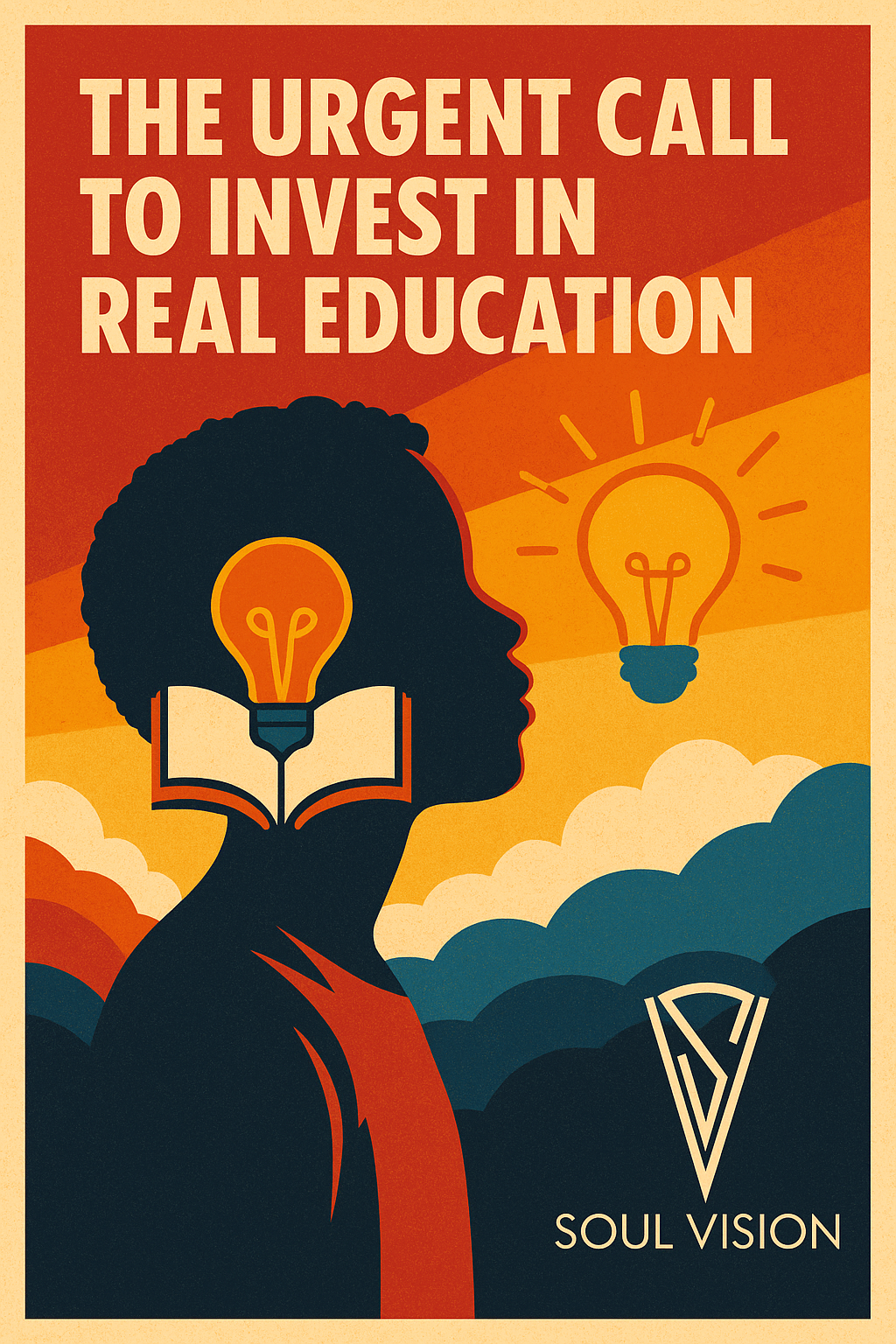


In this moment, when our nation wrestles with questions of truth, identity, and the very meaning of democracy, the stakes for public education have never been higher. What we call “education” too often becomes diluted into test scores, compliance, and political soundbites. But if we are serious about the future, we must invest—not just in schools as buildings, but in real education: one that emphasizes truth, growth, and authenticity.
Truth as the Foundation
Truth is not a luxury. It is the foundation of an honest and equitable society. When we strip truth from classrooms—whether by silencing difficult histories, downplaying systemic inequities, or discouraging critical thought—we leave students unprepared to face the realities of the world. Real education requires the courage to tell the whole story, even when it is uncomfortable. Only then can young people learn to discern, to question, and to act with integrity.
Growth Beyond Metrics
Too often, we equate student success with a score on a standardized test. Growth is not a bubble sheet—it is the expansion of intellect, empathy, and imagination. We must measure progress not only by how well students memorize information but also by how well they apply knowledge to solve problems, collaborate with others, and envision possibilities beyond what they see today. Investing in real education means committing to deeper learning, where growth is measured in human potential, not just percentile rankings.
Authenticity at the Center
Students see through false promises. They know when learning is disconnected from their lives and experiences. Real education must be authentic—rooted in the lived realities of children, responsive to their cultures and communities, and honest about both opportunity and challenge. When authenticity drives our practice, schools become spaces of belonging where every student feels seen, valued, and capable of shaping their own future.
Why Urgency Matters Now
Every delay in reimagining education is another year lost for millions of children. The urgency is not abstract; it is in the faces of students who sit in classrooms today—students who deserve truth-telling teachers, growth-minded leaders, and authentic learning experiences. If we fail to act, we not only diminish their futures but compromise our collective future as a society.
Real education is not optional—it is the moral work of our time. We must summon the courage, align the resources, and embrace the vision required to create schools that liberate rather than limit. Anything less is a betrayal of the young people who are counting on us.
