
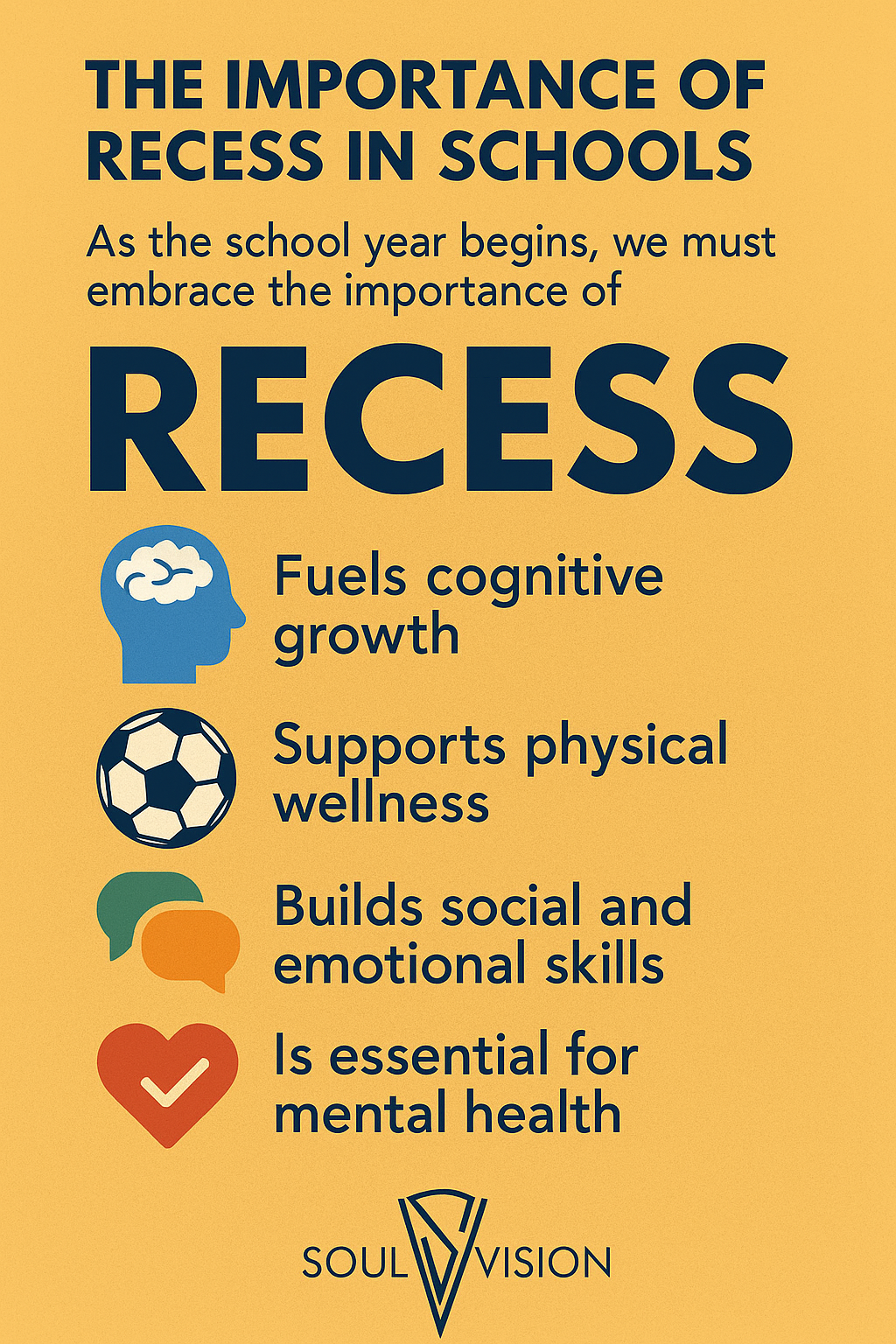


The Importance of Recess in Schools: Why We Must Embrace It Now
As a new school year begins, we find ourselves once again at the crossroads of priorities. With increasing pressure to raise test scores, meet rigorous standards, and accelerate learning, it can be tempting to see recess as optional — something we fit in “if there’s time.” But here’s the reality: there is no better time than now to embrace the value of recess as an essential part of how we educate and care for our students.
Recess isn’t just about play. It’s about equipping students to thrive, academically, socially, emotionally, and physically. If we want to set the right tone for the year ahead, we must lead with a whole-child mindset and recognize recess as a critical investment, not a dispensable privilege.
1. Recess Fuels Cognitive Growth
As schools push to “catch students up,” it’s easy to believe that more seat time equals more learning. But science says otherwise. Children’s brains need breaks to function at their best. Short, frequent opportunities for unstructured play and physical movement:
- Improve focus and attention span
- Enhance memory and problem-solving
- Prime students to absorb and retain new content
At the start of a school year, routines are being established. If we build in recess from day one, we send a clear message: we value learning and wellness.
2. Physical Wellness Sets the Tone for the Year
With the rise of sedentary lifestyles and childhood obesity, schools have an opportunity — and a responsibility — to prioritize movement. Recess provides one of the few guaranteed times during the day when students can:
- Get their bodies moving and strengthen motor skills
- Boost cardiovascular health and fitness
- Develop lifelong habits for physical well-being
A healthy start to the year means embedding wellness in our daily structures, and recess is the most natural place to begin.
3. Social and Emotional Learning Starts on the Playground
The first few weeks of school are critical for shaping relationships and school culture. Recess is where those early bonds are built. It’s where students learn to:
- Negotiate rules and resolve conflicts
- Cooperate and collaborate
- Build empathy and understanding
If we want strong classroom communities, recess must be more than an afterthought — it’s the foundation for belonging and connection.
4. Mental Health Matters More Than Ever
The start of a new school year can bring excitement, but also anxiety and uncertainty. Recess provides a necessary mental reset — a chance for students to breathe, reset, and experience joy. For many, this may be their only unstructured time during the day to simply be kids. Protecting recess from the start sends a powerful message: we see you, we care about you, and your well-being matters.
5. Equity Begins With Access
We must also confront a hard truth: in many schools, recess is withheld as punishment or sacrificed for remediation. But taking away recess disproportionately impacts students who already face challenges outside of school. At the start of this year, we have an opportunity to commit to equity by ensuring that every student, every day has access to the benefits recess provides.
A Call to Action for This School Year
This is not the year to diminish recess. This is the year to reclaim it — to make it a priority, not an afterthought. If we want students who are focused, resilient, and engaged, then we must design our school days to honor their full humanity.
At the dawn of this school year, let’s set the tone for what matters most: balancing academic rigor with wellness, achievement with joy, and learning with living.
Because when we give students space to play, move, connect, and reset, we don’t take away from learning — we unlock it.
